A story about watching closely — and learning what a pattern can tell you.
Case File · The Late Trains
1
Case File · The Late Trains
One ordinary morning in the city of Luminal, something felt different.
The trains were not arriving on time.
Not the early ones. Not the late ones. Something was off — and nobody could say what.
2
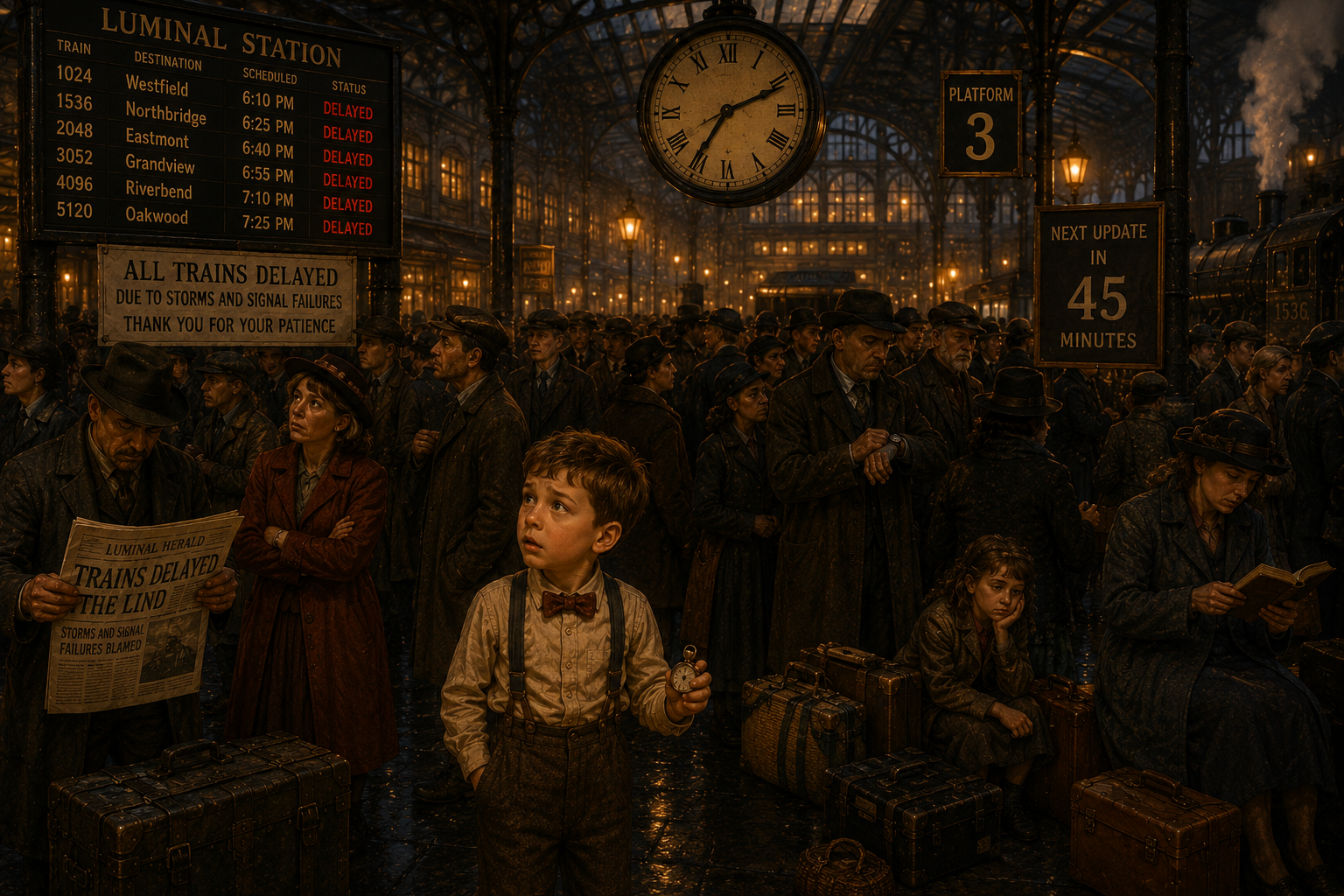
The whole city was stuck
People stood on the platforms. Waiting. Checking clocks. Sighing.
🧑🤝🧑
"They're late again…" "Why does this keep happening?"
No one seemed to know.
3
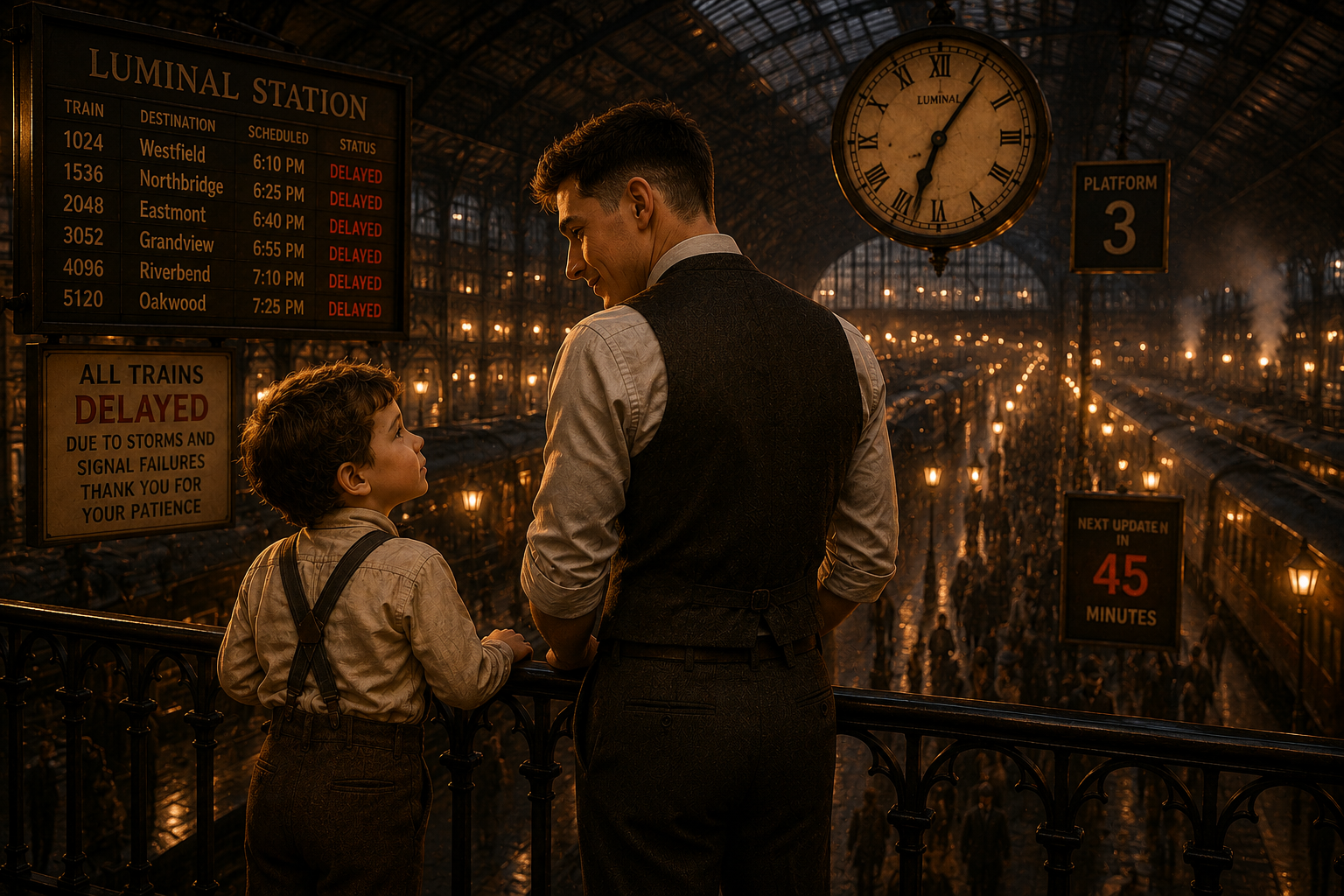
Magne had an idea
🧒
"Can we figure it out?"
🧑🦱
Mr. M smiled, just a little. "We can try to understand it."
Not solve it forever. Not know everything. Just… understand it a little better than yesterday.
4
The whole city was asking
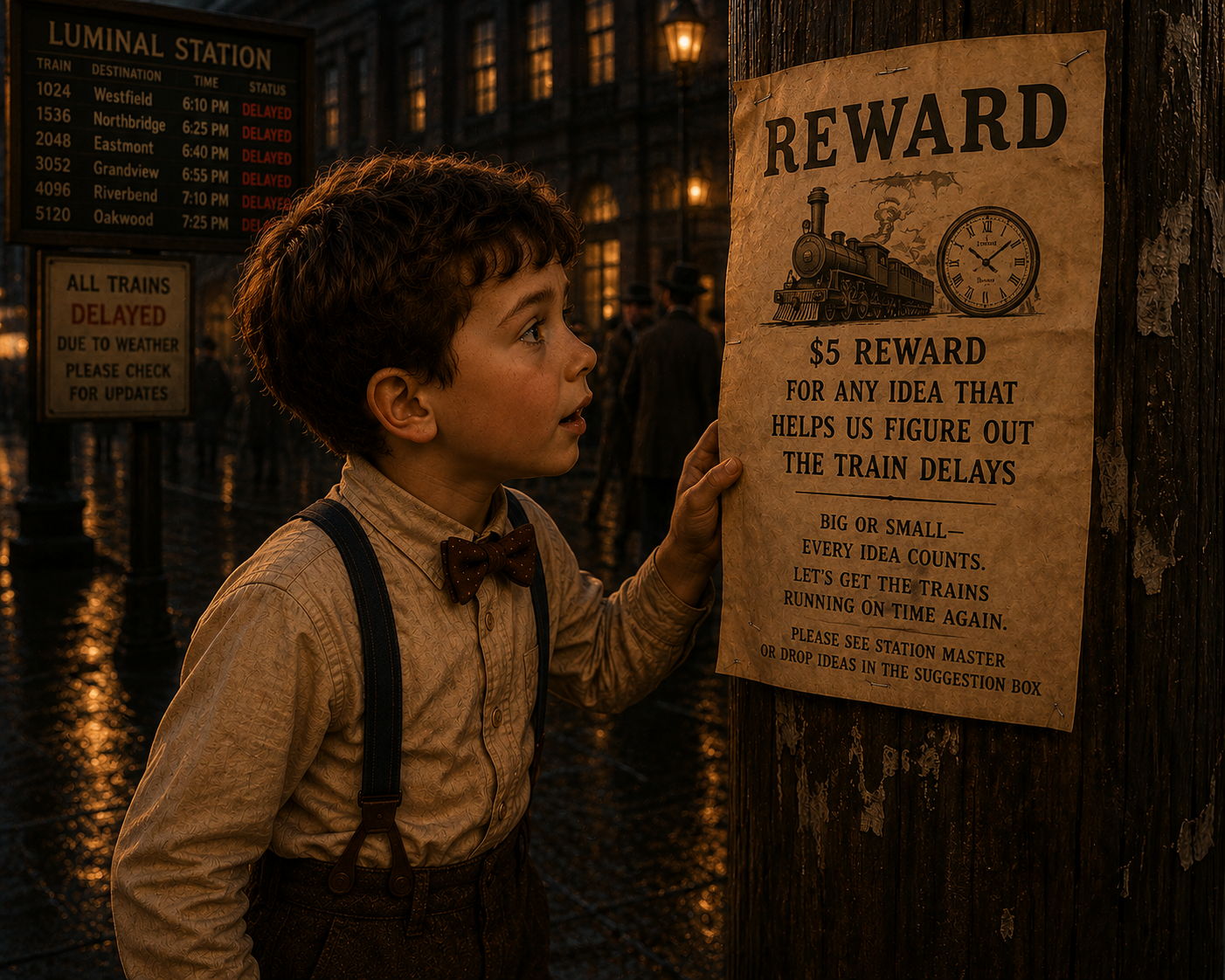
By afternoon, a notice was posted in the square:
"Reward to anyone who can help us understand the train delays."
🧒
Magne's eyes lit up. "Let's do it!"
🧑🦱
"Then we begin the way every good answer begins. By watching."
5
The method
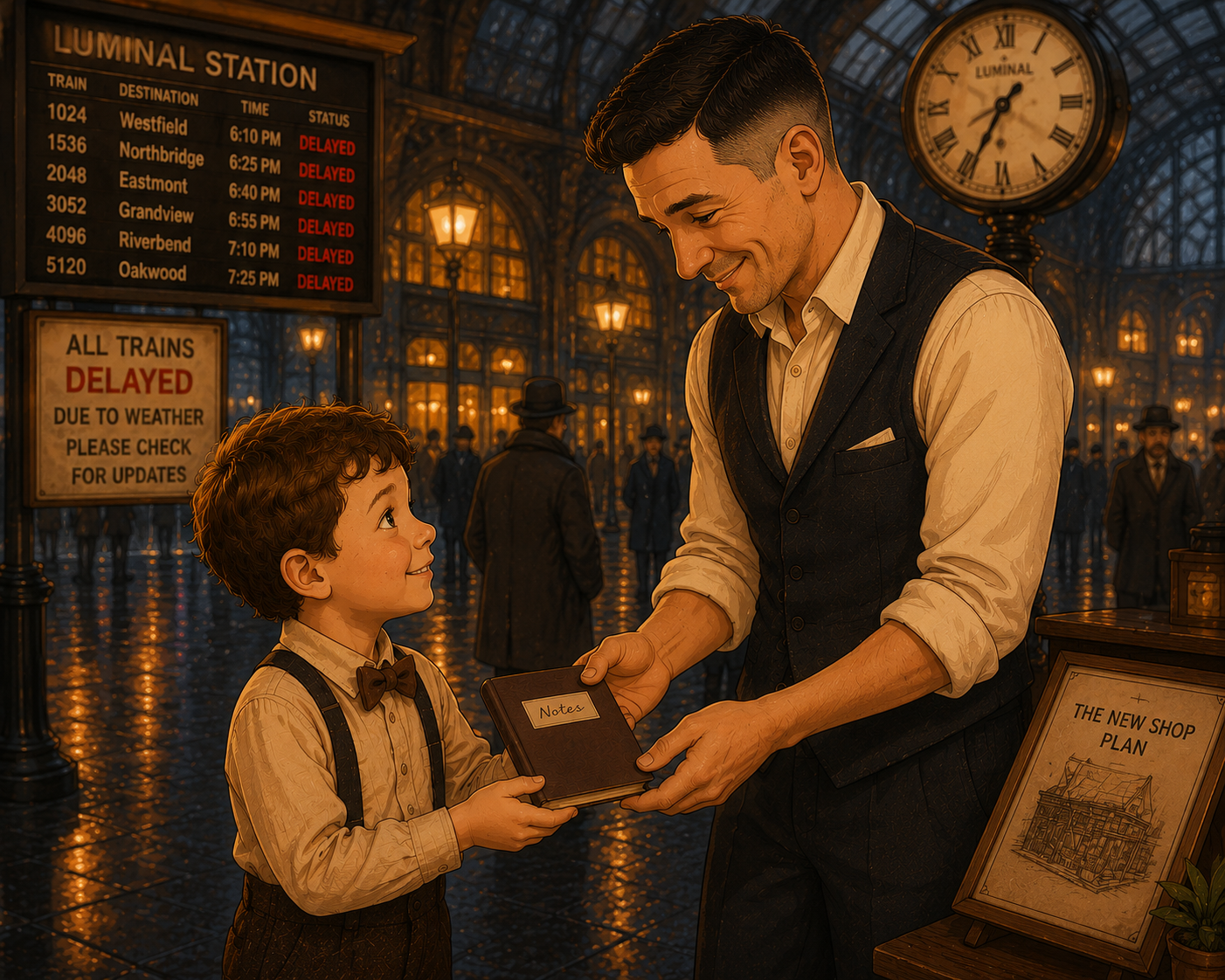
Mr. M handed Magne a small notebook.
🧑🦱
"Three steps. Stand and watch. Notice every train. Write it all down."
New wordData — the little facts you write down so you can study them later.
6
Day after day
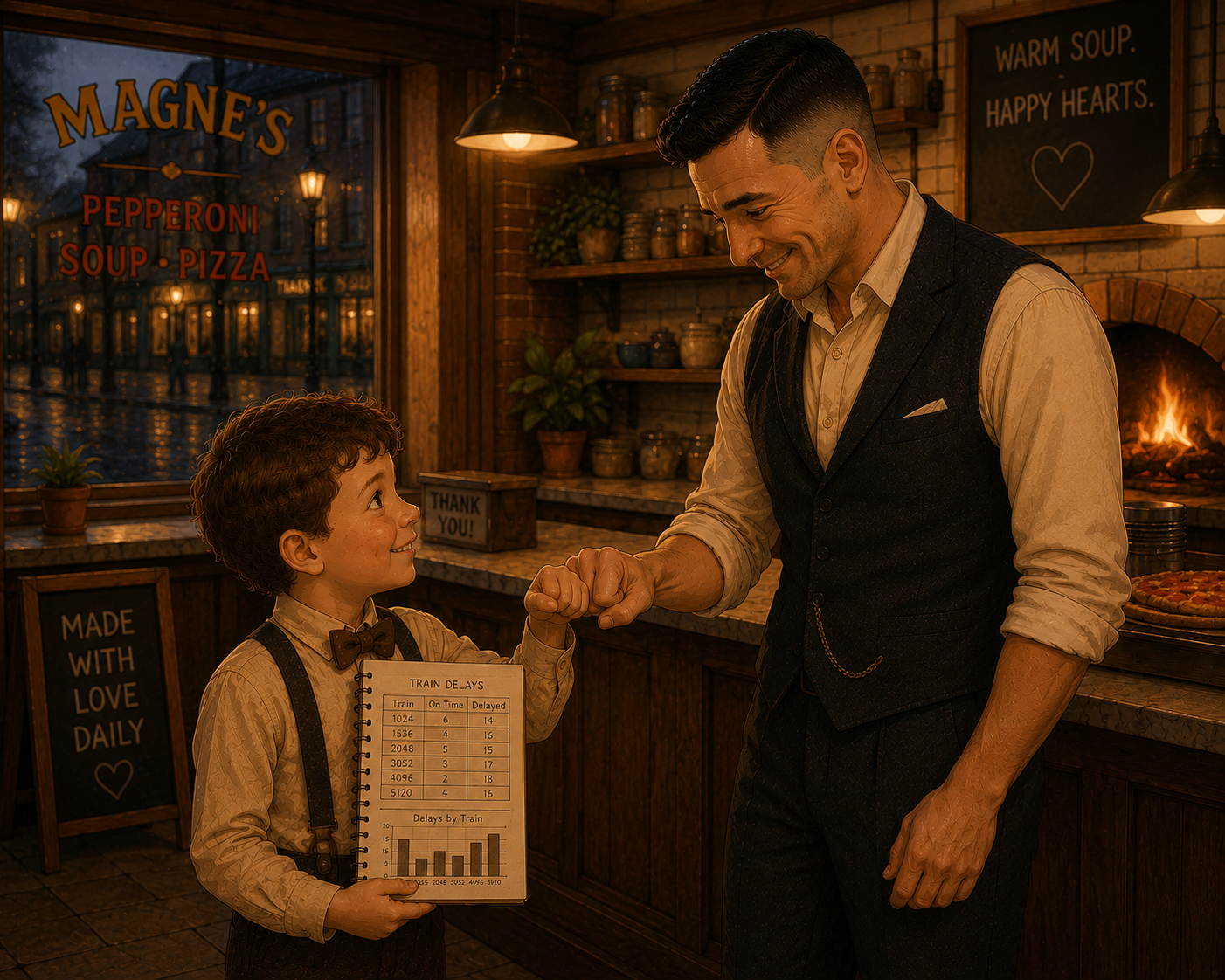
So they watched. Train after train. Some came early. Some came late. Magne wrote down every single one.
Magne's Train Notebook
Mon — 7:00 train … 2 min late
Mon — 1:15 train … 16 min late!!
Tue — 8:30 train … on time ✓
Tue — 2:00 train … 14 min late!!
Wed — 6:45 train … 1 min late
7
Back home, a line and some dots
Mr. M drew a long line across the page. "This is time," he said — morning on the left, evening on the right. Then he placed a dot for every train: how late it was, and when.
Every dot is one train. Higher = later.
🧒
"It's just a mess. There's no pattern!"
8
"Look again," said Mr. M
Same dots. But now — every afternoon, the trains run late.
🧒
"Wait… I think I see something!"
New wordPattern — something that quietly repeats, once you look closely enough to spot it.
9
The pattern, in words
🧒
"The trains are slower… around the same time each day."
🧑🦱
Mr. M nodded. "Not always… but often."
And "often" was enough to know exactly where to look next.
10
The next afternoon
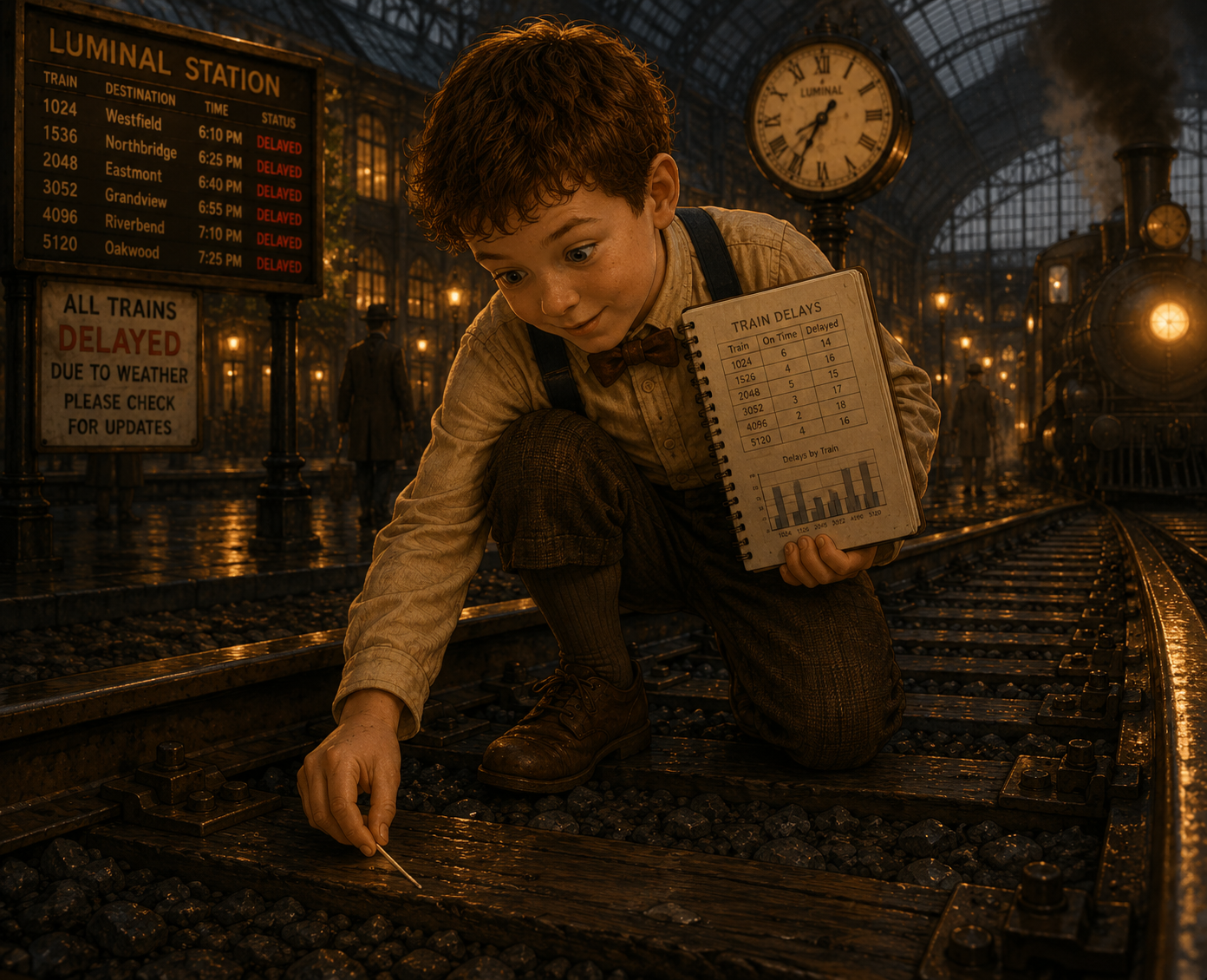
Magne went and stood by the tracks — right at the time the delays usually started. And he watched closely.
Not the clock.
The tracks.
New wordSource — where something actually comes from. Not the clue. The cause.
11
Then he saw it
Something tiny caught his eye. So small he almost walked right past it.
A little wooden toothpick…
…wedged between the rails.
(Dropped, it turned out, by a snack cart that opened every day right at lunchtime.)
12
A tiny thing, a big effect
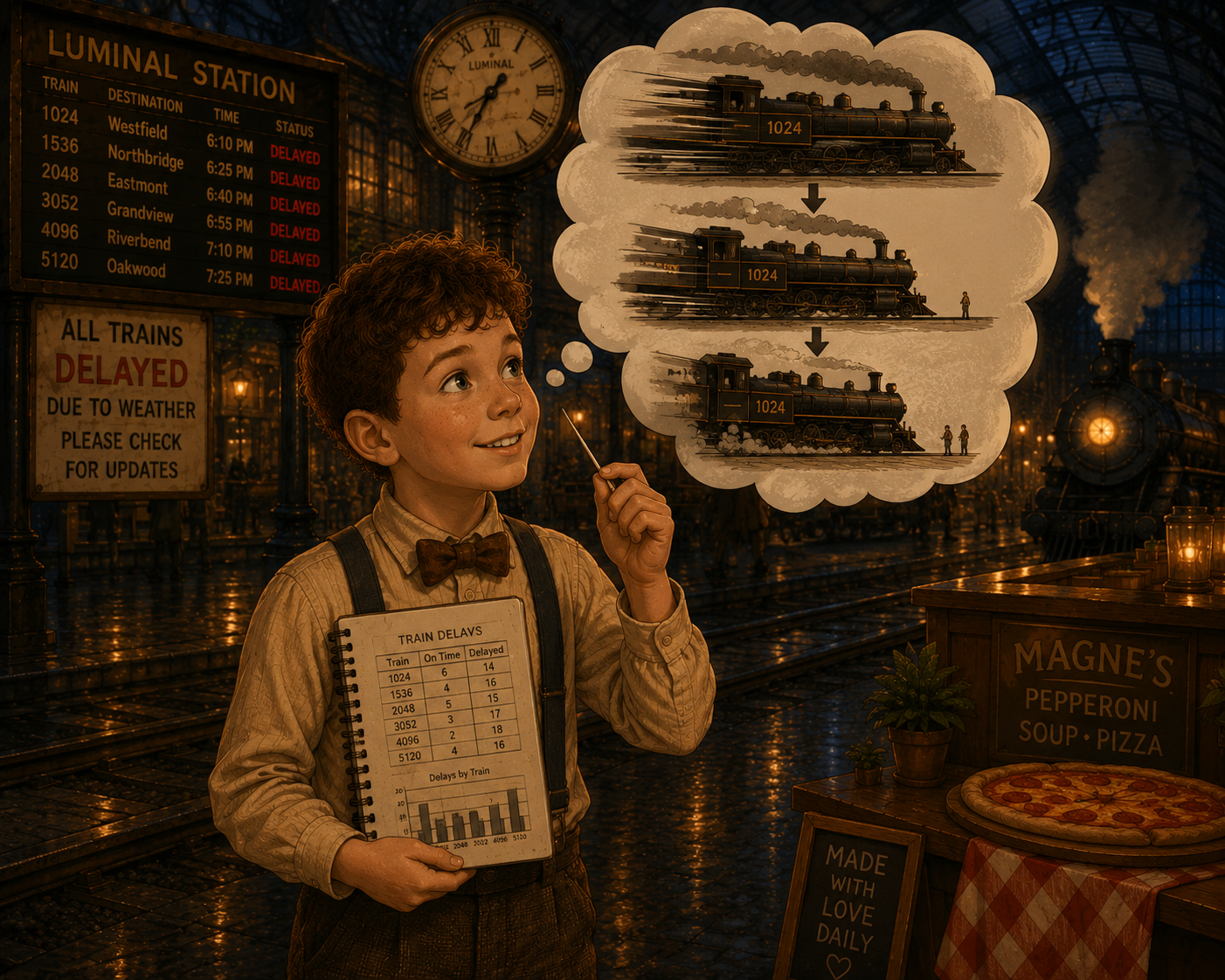
A train rolled over it. Not enough to stop the train…
…but enough to slow it. Just a little.
And a little, every single afternoon, added up.
🧒
"That tiny thing… can change everything?"
13
The important lesson
🧑🦱
"Maybe," said Mr. M. "Or maybe it's one of many things."
🧑🦱
"But you only saw it… because you were paying attention."
14
The reward
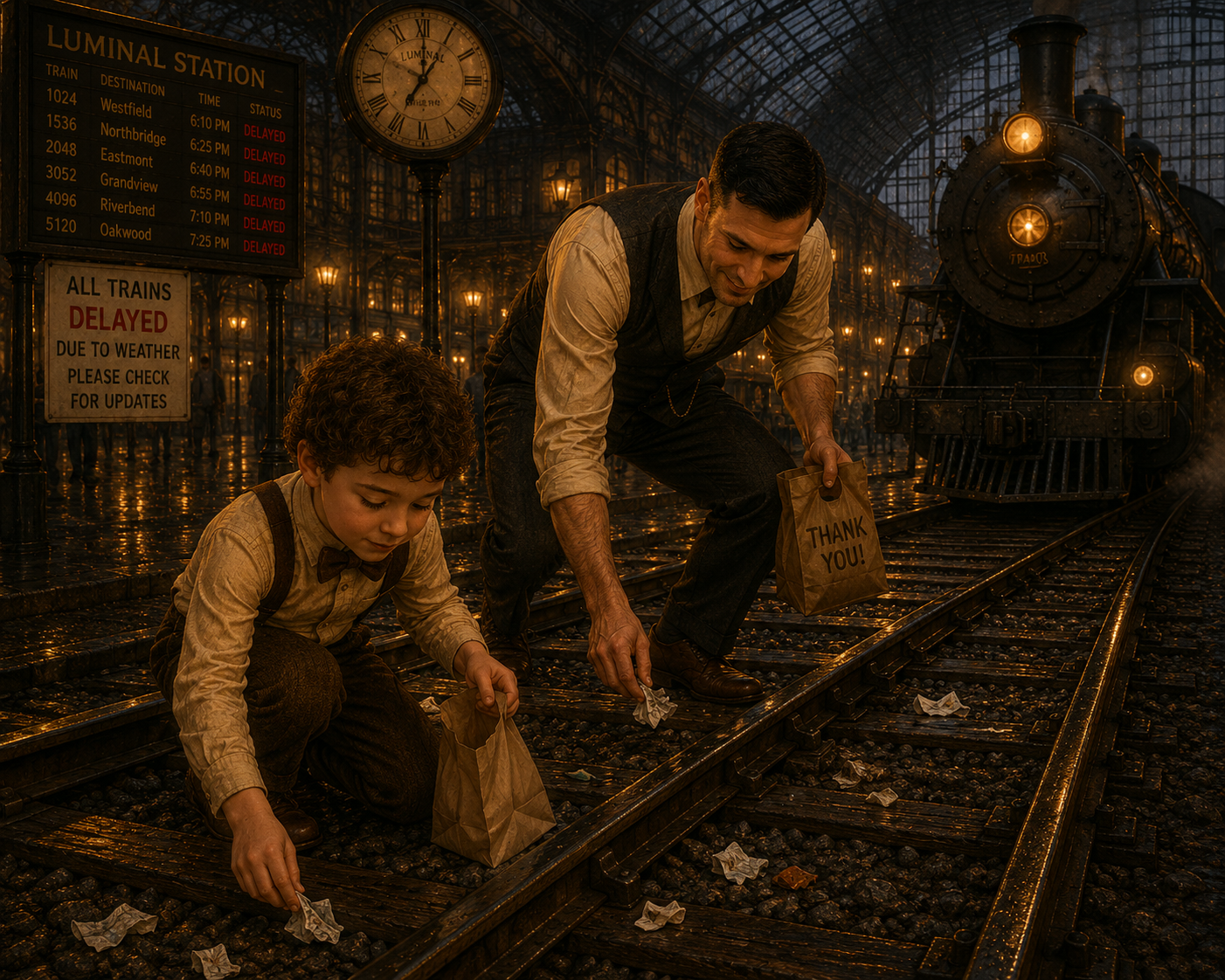
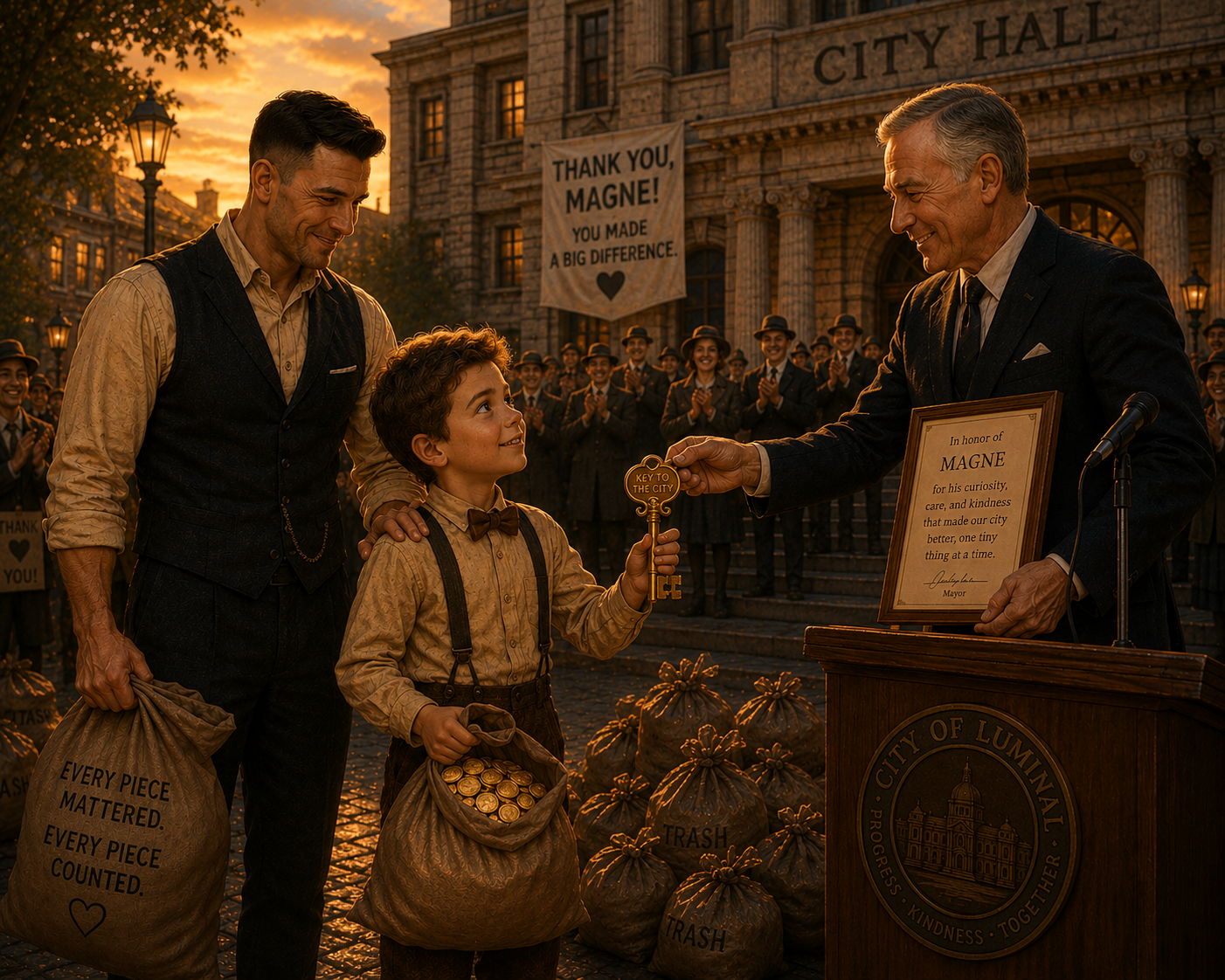
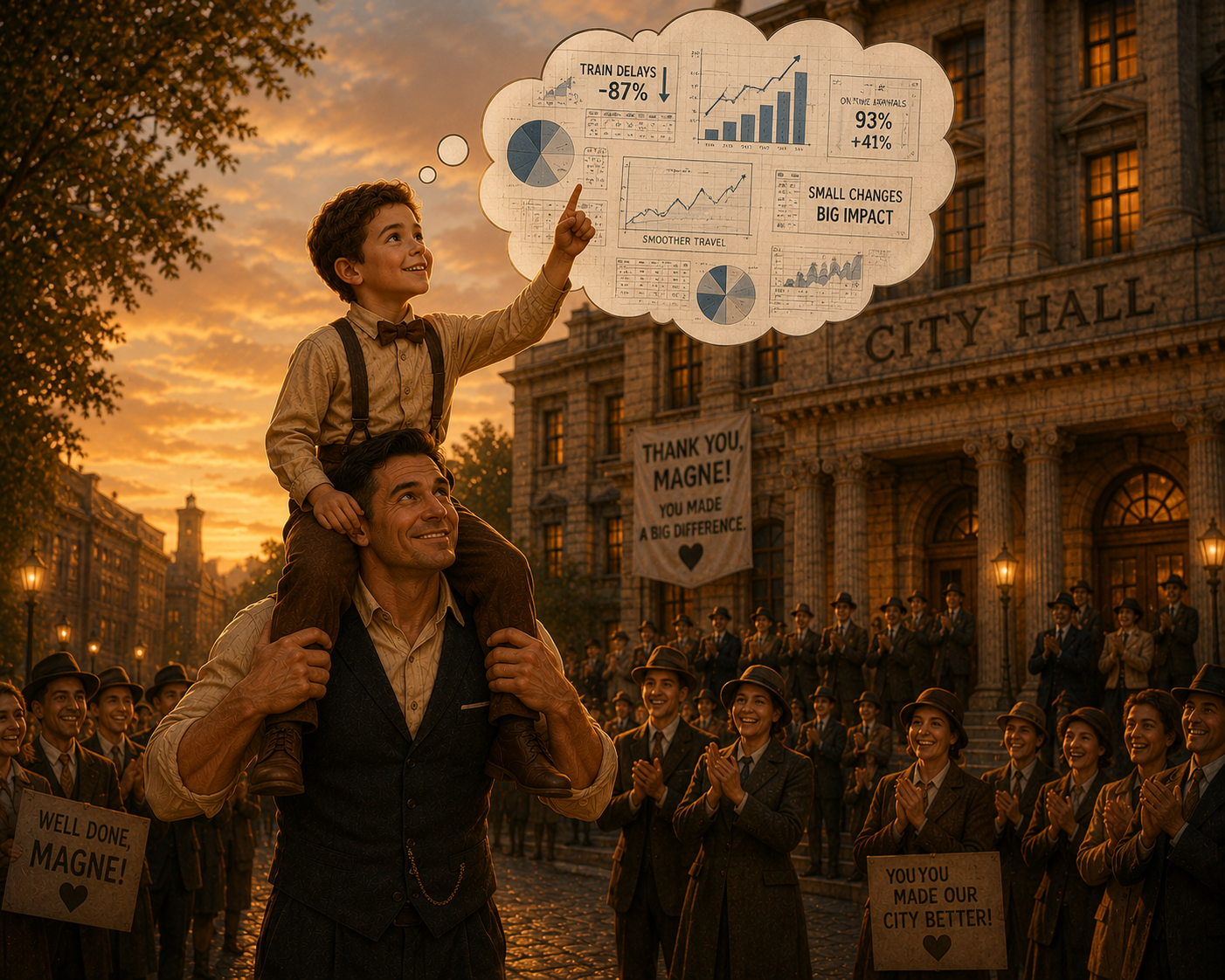
Magne showed the city what he found. They checked the tracks more carefully. They made small fixes. And slowly, the trains began to run smoother. The reward was his.
A good watcher's three rules
1. Write everything down
2. Look twice
3. Go to the source
15
One last question
🧒
"So… charts tell us exactly what will happen next?"
🧑🦱
Mr. M shook his head. "No."
"They help us notice… what others miss."
16
The end of Book Three
That night, Magne added more dots to his chart. Patterns. Questions. Clues. He smiled.
🧒
"I think I'm starting to see the world… differently."
🧑🦱
Mr. M nodded. "That's how it begins."
End of Book Three · The Pattern of the Trains
For the grown-up reading along
What this story is teaching
This is a first lesson in data literacy — and it's three skills, not one. First, recording honest observations (the notebook). Second, plotting them over time so a pattern can surface from what looked like noise (the chart you "look at twice"). Third, chasing a pattern back to its source instead of stopping at the surface.
The most important page is the quietest one. When Magne asks whether a chart tells us exactly what happens next, Mr. M says no. A pattern tells you where to look — it doesn't promise the future. That single habit of mind, planted at seven, is worth more later than any clever trick, because the costliest mistakes people make with money come from mistaking a pattern for a guarantee.
Try it at home with zero math: "Let's write down what time we leave for school all week, and how the morning goes. Is there a pattern?" Then look twice, together.
The KeepMore Company · thekeepmoreco.com · Free financial-literacy material for learners and families. For educational purposes only. This is not investment, tax, or legal advice and is not a recommendation to buy or sell anything. Any figures are simple illustrations to teach a concept. Decisions belong to you and your family.